Digital transformation in manufacturing is often discussed in terms of software platforms, cloud connectivity, and artificial intelligence. What receives less attention is the physical layer that makes all of those capabilities possible: the industrial cameras, lenses, and lighting systems that capture the image data those platforms depend on. Machine vision technology is one of the fastest-growing segments of industrial automation, and understanding its hardware architecture is essential for organisations evaluating automated inspection deployments.
Defining Machine Vision in an Industrial Context
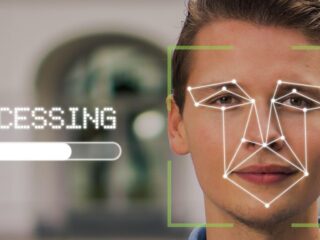
Machine vision is the application of cameras and image processing systems to automate visual tasks in industrial environments. This means inspection systems that detect surface defects, verify component dimensions, confirm assembly completeness, read barcodes and data matrix codes, and guide robotic systems — all without human visual intervention.
The technology is deployed across virtually every manufacturing sector: electronics, automotive, food and beverage, pharmaceuticals, packaging, logistics, and semiconductor fabrication. In each sector, the specific requirements for camera resolution, frame rate, interface, lens specification, and lighting design differ significantly based on the inspection task, production speed, and environmental conditions.
What unifies all machine vision applications is a fundamental dependency on image quality. The image data captured by the camera is the input to every algorithm and AI model in the system. The quality of that input determines the ceiling of what the system can detect and how reliably it can detect it.
Camera Technology and Interface Standards
Industrial cameras for machine vision are purpose-built devices distinct from general-purpose imaging equipment. They incorporate global shutter sensors for distortion-free capture of moving objects, hardware triggering for synchronisation with production line timing, and ruggedised housings rated for industrial environments.
Interface standards define how image data is transmitted from the camera to the processing computer. The GigE Vision standard, based on Gigabit Ethernet, is the most widely deployed interface in industrial machine vision due to its compatibility with standard network infrastructure and support for long cable runs. The USB3 Vision standard offers higher raw bandwidth for applications where distance is not a constraint. CoaXPress and Camera Link standards serve the highest data throughput applications, including high-resolution line scan cameras and ultra-high-speed area scan systems used in semiconductor inspection.
Camera selection for a specific application involves balancing resolution, frame rate, sensor size, dynamic range, and interface against the spatial and temporal requirements of the inspection task. Undersizing any parameter relative to the application requirement produces a system that cannot reliably perform the inspection it was designed for.
Optics: Matching Lens to Camera and Application
The optical system connecting the industrial camera to the scene being inspected has a direct and quantifiable effect on image quality. Lens selection requires matching several interdependent parameters: sensor size, required field of view, working distance, and the resolution required to detect the smallest feature of interest.
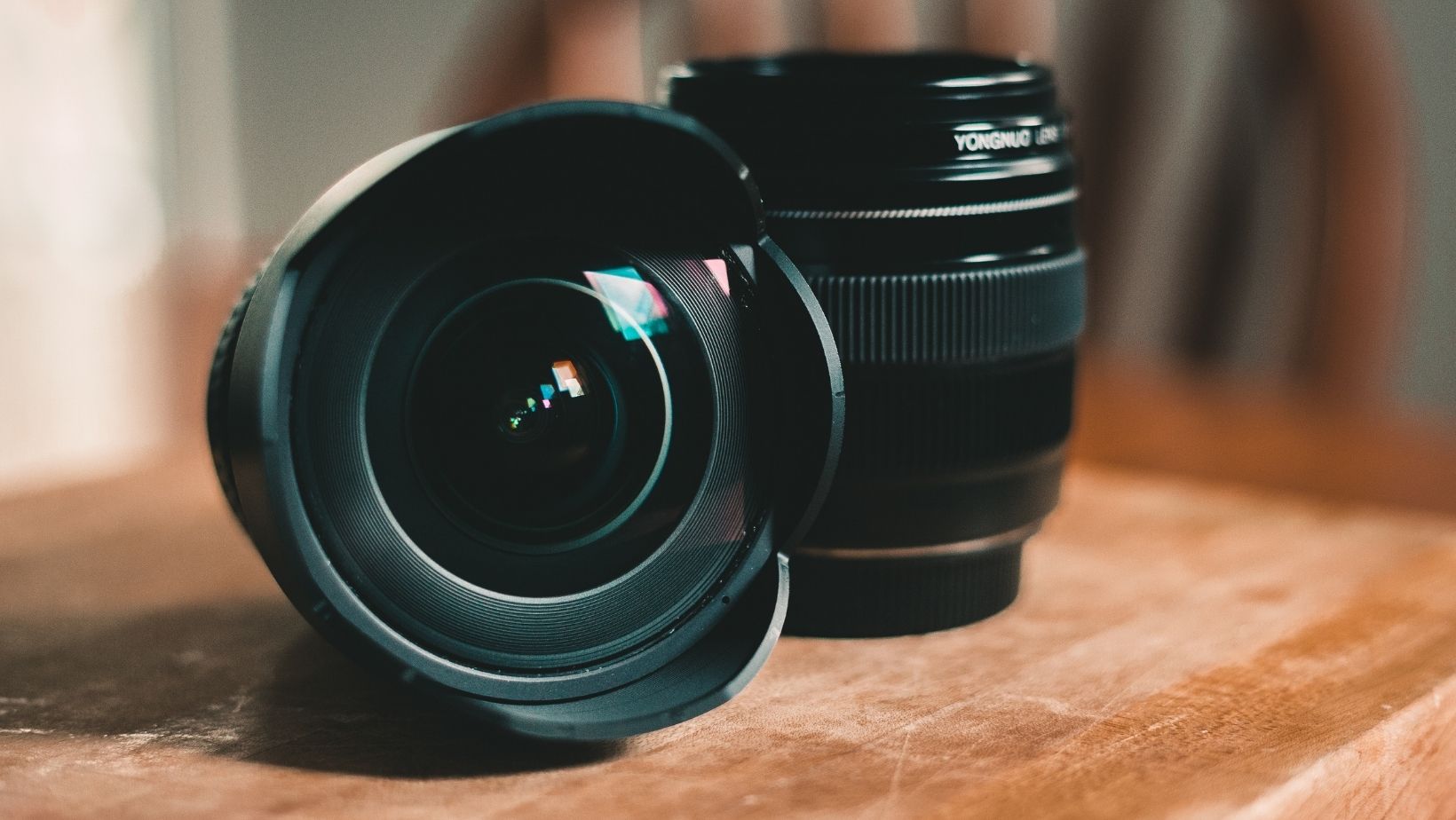
For dimensional measurement applications, telecentric lenses are the standard specification because they maintain orthographic projection — constant magnification independent of object distance — necessary for accurate metrology. For general inspection, machine vision lenses are available in a wide range of fixed focal lengths selected based on sensor format and working distance constraints.
Lighting: Engineering Contrast for Reliable Detection
Machine vision lighting serves a fundamentally different purpose from general industrial illumination. Its objective is to create specific contrast conditions in the captured image that maximise the detectability of the features of interest while minimising visual noise generated by surface variation, ambient light, and product-to-product differences irrelevant to the inspection decision.
The major lighting geometries each have distinct optical properties suited to specific inspection scenarios. Backlight illumination creates high-contrast silhouettes for dimensional and positional measurement. Coaxial illumination eliminates shadows and specular reflections on flat, polished surfaces. Darkfield illumination reveals surface micro-features by illuminating at a very low angle so that only surface irregularities scatter light toward the camera. Structured light enables three-dimensional surface reconstruction for height measurement and volumetric inspection. Purpose-built machine vision light — available in bar, ring, dome, coaxial, and darkfield configurations — gives system designers the precise control over contrast conditions that reliable automated inspection depends on.
Lighting design errors are the most common root cause of machine vision system underperformance in production. A system that performs well in a controlled laboratory environment but produces high false-reject rates in production is typically experiencing lighting instability caused by ambient light variation, incorrect lighting geometry for the surface material, or insufficient control of specular reflections.
Integration Considerations for Technology Leaders
Organisations deploying machine vision as part of a broader digital transformation programme should plan for the hardware specification phase with the same rigour applied to software architecture decisions. Camera, lens, and lighting selection should be driven by the specific requirements of each inspection application.
Engaging specialist machine vision hardware suppliers at the specification stage significantly reduces deployment risk. Suppliers with domain expertise in industrial imaging can model the optical system for a proposed inspection application, recommend appropriate hardware combinations, and identify potential failure modes before equipment is ordered.
As organisations expand machine vision deployments across multiple inspection points and production lines, hardware standardisation delivers meaningful operational benefits: reduced spare parts inventory, consistent integration patterns across sites, and simplified maintenance and troubleshooting.
Conclusion
Machine vision is a core enabling technology for manufacturing automation and quality management, and its adoption is accelerating across industrial sectors globally. The capabilities of AI-driven inspection software continue to advance rapidly, but the physical imaging hardware — industrial cameras, machine vision lenses, and purpose-built lighting — remains the foundation that determines what those capabilities can achieve in practice.
Technology leaders evaluating or expanding machine vision programmes should treat hardware specification as a technical decision requiring domain expertise. The quality of the image data captured by the hardware layer is the single most important determinant of system performance, and getting it right from the outset is the most reliable path to successful deployment.
About the Author