The evolution of programmatic advertising has transformed the landscape of digital marketing, where billions of ad impressions are transacted via milliseconds of automated auctions each day. Demand-side platforms (DSPs), the technologies that enable these transactions, provide advertisers with the ability to assess inventory, interpret audience signals, and purchase impressions in real time.
Currently, there is debate around the media agency, trading desk, and advertisers regarding how to truly define “the best DSP. ” Media buying experiences support the notion that marketers utilize the marketing materials’ claims regarding automation and scale while placing more focus on operational issues, data ownership and restrictions, customization and its ability to customize, and adapting to continuing changes in privacy and targeting.
In addition to exploring operational critical issues, many experienced media buyers have shown significant interest in alternative operational infrastructures such as “DSP white label” platforms, which allow companies to establish a programmatic environment without needing to start from scratch.
Programmatic Advertising Is No Longer Just About Automation
Early on, DSP technology gained popularity due to the speed and ease of automating the purchase of advertising across many publisher sites, compared to the old method of negotiating manually for each ad placement. Today, expectations of DSP technology have greatly increased, with advertisers needing to analyze large sets of data, including behavioral data, contextual signals, historical performance, and pacing of budgets in real time before forming a bid strategy.
Additionally, the modern DSP must be able to execute campaigns across several different formats (e.g., display ads, video ads, mobile apps, and, increasingly, over-the-top television). Because of this increased complexity in the advertising ecosystem, the determining factor in choosing the best DSP may be more about how well the different DSPs process and interpret data than about the size of their marketplace.
Why Agencies Want Greater Control Over Media Purchasing Technology
Another influence on the programmatic space is the search for independence with technology. Many agencies that control large budgets want more visibility into how decisions for their campaigns were formulated.
Legacy platforms restrict the amount of control that agencies can have on bidding methodologies, as well as fee structure and workflow design. As a result, some organizations have turned to customized infrastructure models.
An example of this would be a white-label DSP. The benefit of using a white-label DSP is that the agency utilizes an already existing backend system whilst maintaining its own brand through the interface it presents to the agency’s customers. In practical terms, this allows the agency total control over its operational layer (campaign structure, reporting views, and client access), while the technology provider maintains the bidding engine and integrations for the agency, as well as ensuring that all operational components function correctly.
The Infrastructure Layer Behind Programmatic Campaigns
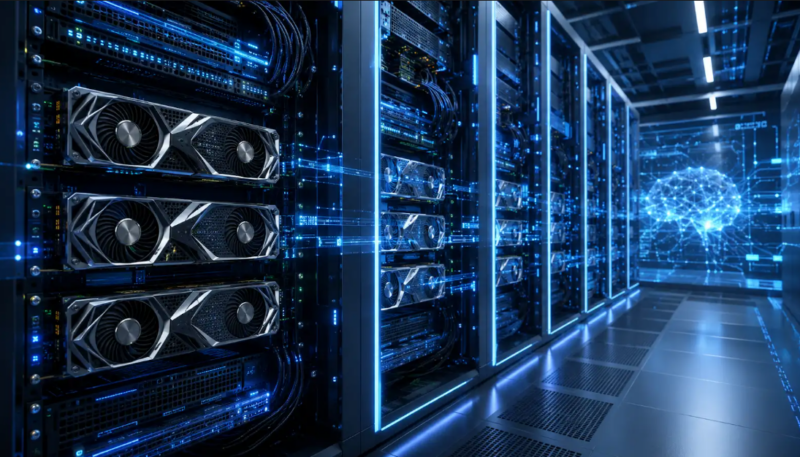
While most advertisers consume dashboards and reports from their advertising campaigns, there is a lot more behind these interfaces that make them function properly in a programmatic advertising environment.
For example, real-time bidding engines need to respond to auction requests in fractions of a second. This is only done through an infinite number of variables being constantly monitored, including all the user behavior signals, geo-targeting rules, budget caps, and history of past campaign performance.
For DSPs to keep running smoothly, they have to connect with all the other components of an ad campaign system, from the exchanges to data providers, verification tools, and measurement platforms. As an agency is considering which DSP to use, they generally look at how stable and scalable the underlying infrastructure is while under heavy traffic load.
Companies Enabling Custom Programmatic Environments
A whole section of ad tech corporations has been created to help agencies build the tools they need to manage their programmatic campaigns. At the same time, these companies are not traditional media owner companies but companies that develop the platform technology to automate the way advertisers put their advertising in front of people.
Gamoshi has gained a lot of attention in our industry for being the perfect example of a company that helps digital service providers offer white-label versions of themselves. By using the White Label solution, advertising agencies or retail media networks can create their own unique programmatic digital service provider based on a solid technological foundation to conduct their bidding and other integrations.
This approach will permit companies to be more directly involved in the activity of digital advertising, without the high costs of independently building their own digital service provider.
Signals That Indicate a High-Quality DSP Platform
When agencies evaluate potential DSP partners, different needs may arise, but there are several common indicators that will emerge throughout their evaluations.
The most common indicators will be
- Availability of bid response times that are consistent to deliver timely processing of auctions.
- Data integration flexibility to enable advertisers to utilize first-party and contextual data.
- Support for cross-channel campaigns through the use of new formats such as CTV.
- Provision of clear reporting structures that show how impressions have been purchased.
- Operational flexibility for customized optimization strategies.
Platforms that can provide these capabilities will stand out to advertisers in their search for the ideal DSP environment.
How the Definition of the Ideal DSP Is Changing
Due to the changes in technology, changes in privacy regulations, and changes in consumer consumption of media, the way that programmatic advertising has developed has continued to evolve. The move toward a cookie-less society and the increase in the number of streaming services available have begun changing how we target and measure performance.
As the pace of these changes accelerates, agencies want to be more adaptable when selecting platforms within which to operate. Technologies that offer customization, integration of data, and flexible, scalable infrastructures are becoming the focus, rather than rigid solutions developed specifically for one type of advertising.
Because of these developments, some agencies are interested in DSP white-label options because they allow the agency to have operational control of its environment while benefiting from sophisticated programmatic technologies.
Conclusion
The process of identifying an appropriate DSP has shifted from previously being a matter of selecting the software that fit an agency’s needs to now being a much broader enterprise-level decision based on numerous factors, such as the reliability of the DSP’s infrastructure, the DSP’s data integration capabilities, the DSP’s reporting transparency, and the ability for the DSP to be agile and responsive in an ever-changing digital advertising environment.
In addition to this, the increased prevalence of both white-label DSPs and white-label DSP platforms is indicative of the changing landscape for technology and advertising. Agencies can develop a programmatic environment where there is a balance between flexibility and the scale of technology by leveraging the customizable interfaces of DSP vendors and the established infrastructure of many technology companies, such as Gamoshi.
About the Author