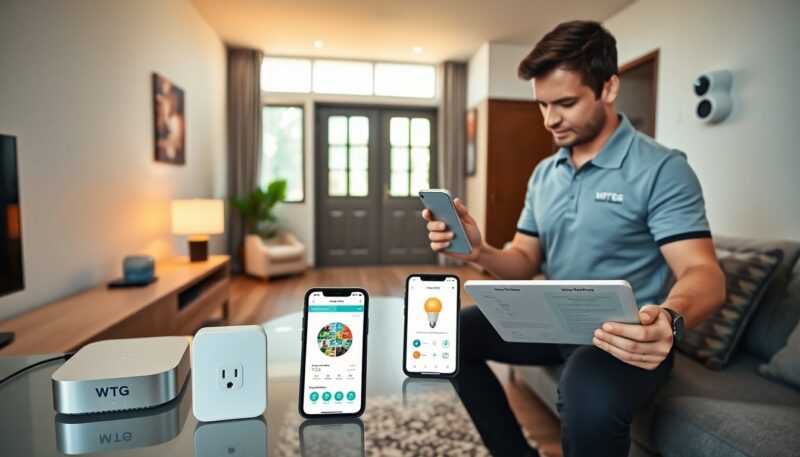
Smart home sensors stopped being a novelty a while ago. They are now one of the cheapest lines of defense against the most expensive problems a house can throw at you — flooding, gas leaks, mold, and a heating bill nobody saw coming. Here is what is actually worth installing, and why.
Water Leak Sensors: The One That Pays for Itself
Water damage is the second most common home insurance claim in the United States, accounting for over 43% of all claims in 2024. Around 14,000 Americans deal with water damage every single day. The average payout per claim sits at roughly $13,954 — for a problem that a $30 sensor on the bathroom floor could have caught in minutes.
Water leak sensors work by completing an electrical circuit when moisture touches two contact points. Simple, almost boring in principle. In practice, they catch slow drips behind washing machines, toilet base leaks, and the slow seep that eventually destroys drywall. Premium models like the Flo by Moen Smart Water Detector combine water, humidity, and temperature sensing in one unit and push alerts to a phone the moment something goes wrong. Some pair with automatic shutoff valves, so if a pipe bursts while the family is on holiday, the water stops on its own.
Placement matters more than most people think. The best spots are:
- Under sinks and behind dishwashers
- Near water heaters and washing machines
- At the base of toilets and in basement floor drains
Sensors catch what happens at the surface — moisture reaching a floor, a pipe joint weeping, a slow drip behind a wall. What they cannot assess is the condition of the pipe itself. In homes over 30 years old, the real risk often sits underground: clay or cast iron drain lines that have cracked, shifted, or partially collapsed long before any visible symptom appears. A sensor alerts when water is already somewhere it should not be. The underlying pipe problem started years earlier. That is where drain relining Toronto specialists come in — restoring structural integrity from the inside without excavating floors or breaking concrete, addressing the cause rather than the symptom.
One out of every 67 insured homes files a water or freezing damage claim in a given year. Sensors reduce the damage window dramatically, but the most effective approach combines real-time detection with periodic inspection of what sensors cannot see.
Gas and Carbon Monoxide Sensors: Two Different Threats
People often assume a carbon monoxide detector handles gas leaks. It does not. Carbon monoxide and natural gas require entirely different sensors, and mixing them up is a genuine safety gap.
Carbon monoxide is colorless and odorless. Over 400 Americans die from unintentional CO poisoning every year, and more than 100,000 end up in emergency rooms. The gas binds to hemoglobin 200 times more effectively than oxygen, which means a person can lose the ability to react — or even wake up — before symptoms feel alarming. A quality electrochemical CO detector, installed outside bedrooms as recommended, is non-negotiable in any home with gas appliances, a furnace, or an attached garage.
Natural gas sensors are a separate category entirely. Natural gas is lighter than air and rises to the ceiling, so these devices should be mounted high on the wall, not at outlet height. Between 2005 and 2024, serious gas incidents in the US caused over 177 fatalities and 801 injuries. A detector that recognizes the smell of rotten eggs faster than the human nose — especially during sleep, when olfactory sensitivity drops — is a practical necessity, not an upgrade.
Things to know before buying in this category:
- CO detectors need replacing every 5 to 7 years; the sensor degrades
- Natural gas detectors and CO detectors are not interchangeable
- Combined multi-gas units exist but confirm they actually test for both
Temperature and Humidity Sensors: The Slow Damage Nobody Notices
A water leak announces itself. Humidity does not. It just quietly ruins things — joists, insulation, electronics, health. Mold begins growing in 24 to 48 hours in conditions above 60% relative humidity, and most homeowners have no idea what the humidity level is in their basement or crawl space.
Temperature and humidity sensors are typically the least expensive IoT devices in this category, often under $20, and they transmit continuous readings to a phone app or smart home hub. Their value is less about emergencies and more about catching slow deterioration. A crawl space that sits at 70% humidity all summer will cost far more to remediate than a sensor that logged the problem in March.
The IoT sensors market overall was valued at over $16 billion in 2024 and is projected to grow at a compound annual rate of 34.4% through 2029. Temperature sensors are among the fastest-growing product types, driven partly by smart HVAC integration. When a temperature sensor tells a thermostat that one room is 4 degrees colder than the rest, the system adjusts. That is the version of home automation that actually saves money.
Practical applications worth considering:
- Crawl spaces and basements: humidity monitoring prevents mold
- Attics: temperature spikes signal inadequate insulation or ventilation
- Near pipes in unheated spaces: freeze alerts before pipes burst
A useful rule of thumb: if a space in the home is not regularly visited, it probably needs a sensor more than the rooms that are.
Getting Started Without Overcomplicating It
The biggest mistake is buying a sensor and forgetting it exists. Every sensor needs a working notification path — phone alerts, tested regularly, with someone actually checking them. A water sensor with dead batteries does exactly nothing.
Start with water, then gas, then temperature and humidity. Most sensors connect via Wi-Fi or Zigbee and integrate with Alexa, Apple Home, or Google Home. Check recent independent reviews before buying — the landscape shifts fast.
A basic setup covering water, CO, natural gas, and one temperature sensor runs between $100 and $250. The average water damage claim alone is nearly $14,000. The math is not complicated.
About the Author