The recent changes in the internet and how people have had an opportunity to interact with different AI models have impacted not only information consumption but also all kinds of leisure activities. It seemed impossible to see the transition to digital-first models happen so fast, as it is even more important than just a change in medium from physical to virtual. It is a profound transformation of cultural codes, economic strategies, and social interactions, dictating new rules of the game for both content creators and consumers.
The thing that defines the modern connected era is the ability to become a part of the global information space just by having the internet. Thanks to the internet, there are no geographical, temporal, or cultural boundaries, allowing entertainment products to build an audience from different parts of the world. It is worth taking a more detailed look at how sectors of the industry were transformed, and what awaits people in the future.
Historical Context – From Physical Ownership to Digital Access
To understand how much things have changed, it is enough to think back to the last century. Back then, the entertainment industry relied on tangible things. People stocked shelves with vinyl, cassettes, and DVDs. It was not just about consuming content, as visitors immediately understood your taste and status based on your disc collection. And if you wanted truly great sound or visuals, you had to go to the cinema or the stadium. There were simply no options.
The first signs of the digital revolution sounded at the turn of the 90s and 2000s. The MP3 format and the first pirate networks emerged. At first, it looked like a disaster for labels and total theft, but it was then that the foundations of today’s market were laid. Then came the first online stores, where we still «bought» files. People downloaded them to hard drives and players, trying to maintain at least some semblance of ownership.
But the real explosion happened with the advent of the cloud and streaming. The ownership model finally gave way to the access model. Now people do not need cabinets full of discs or terabytes of computer storage. They simply pay a subscription and get access to the world’s entire music and movie library in seconds. This has freed people from unnecessary clutter and made entertainment truly mobile: their favorite TV series is always at hand, anywhere in the world.
Technological Catalysts For Digital Transformation
It is difficult to grasp the scale of change without looking under the hood of the technologies that enabled it. Without powerful hardware and connectivity, any ideas in digital entertainment would remain simply pretty pictures in presentations. There are four pillars that underpin the modern world of entertainment:
- Internet speed – from 4G to 5G. The internet has become a kind of «circulatory system» for content. Whereas previously we waited for images to load, with 5G we can easily stream heavy games or 4K videos while on the go. Minimal latency has transformed mobile gaming from a pastime into a serious hobby.
- The evolution of gadgets. Smartphones have long ceased to be mere «phones». In other words, everyone has a supercomputer in their pocket, more powerful than old PCs. A powerful screen and sound have transformed a phone into a full-fledged cinema and gaming console.
- Cloud technologies. Now you do not need to buy an expensive computer to play the latest top games. The cloud takes care of all the hard work: the game runs on a powerful server somewhere in a data center, and a video stream is simply streamed to your screen.
- Smart recommendations. Algorithms and neural networks know our tastes better than we do. They monitor every like and view to suggest the exact video or track that will keep you engaged with the app longer.
These technologies have completely changed the rules of the game. High-quality content is now available everywhere: on the subway, in line, or on the couch. This has become the new standard, and those accustomed to the «old-fashioned» way, like regular TV, are forced to either adapt or simply disappear.
Transforming the iGaming and Interactive Betting Industry
If you want to see the best illustration of how digitalization is changing everyday life, look at the gambling and betting industry. While in the past, everything was tied to physical activity, you had to travel to a casino, find a sportsbook, or get to the racetrack. This required time, travel expenses, and a certain social ritual. But the internet has simplified everything, putting the entire industry in the user’s smartphone.
What has changed for the player:
- Speed and scale. Modern platforms are highly complex systems capable of processing millions of transactions simultaneously.
- Immersion. Today, simply pressing the «bet» button isn’t enough. People want to watch HD broadcasts, follow live statistics, and check live odds right as the match unfolds.
- Convenience and security. For example, the WinBet platform demonstrates how these standards work: the interface adapts to any smartphone, and behind the scenes, data protection algorithms and fairness verification are in place.
Digital technology has brought elements of gamification to betting. It is no longer just a simple win/lose deal, but an entire ecosystem with quests, tournaments, and loyalty programs. Virtual sports and computer games have emerged that would otherwise be impossible to achieve without the internet. All of this attracts a young audience for whom smartphones are their primary means of relaxation and entertainment.
The Age of Streaming – The Global Dominance of Video-on-Demand
Television, which for decades dominated our evenings, has clearly reached a dead end. The very idea of linear broadcasting – waiting for your favorite show on schedule and patiently waiting through commercial breaks- is outdated. People have finally entered the video-on-demand era. Today, Netflix, Disney+, and HBO Max rule the market, and this is not just a change of the content source, but a transformation of the whole format of how people watch their favorite shows and movies by being able to access them at any moment.
Digital has changed not only how we watch, but also what we watch. Streaming companies see our every click and invest billions in content guaranteed to be a hit. Among the things that have fundamentally changed:
- Binge-watching. The phenomenon of binge-watching has killed the classic plot with a cliff-hanger at the end.
- New narrative. Directors no longer need to contrive cliffhangers at the end of each episode to keep viewers hooked until next Tuesday.
- Film format. Modern TV series have turned into one huge, multi-hour film, which is simply divided into chapters for convenience.
To understand the scale of the «digital revolution», just look at how we watched movies back then and how we do it now.
|
Feature |
Good Old Fashioned TV |
Streamers and VOD |
|
When to watch |
You wait for the scheduled airtime. |
Anything you want, anytime you want. |
|
Ads |
15-20 minutes of annoying commercials every hour. |
None at all or subtle, non-intrusive ads. |
|
Who chooses |
The channel’s programming director. |
You are in control + smart AI recommendations. |
|
Where to watch |
Pretty much just the living room TV. |
Phone, tablet, laptop, or console. |
|
Availability |
Restricted by cable providers and regions. |
Global releases; the whole world watches together. |
It works pretty simply – old television forced people to adapt, but modern platforms adapt to users’ behavior. In a world where everything happens on the run, the ability to decide what and when to watch is no longer a luxury but a basic requirement for comfort.
Video Games As New Social Hubs and Metaverses
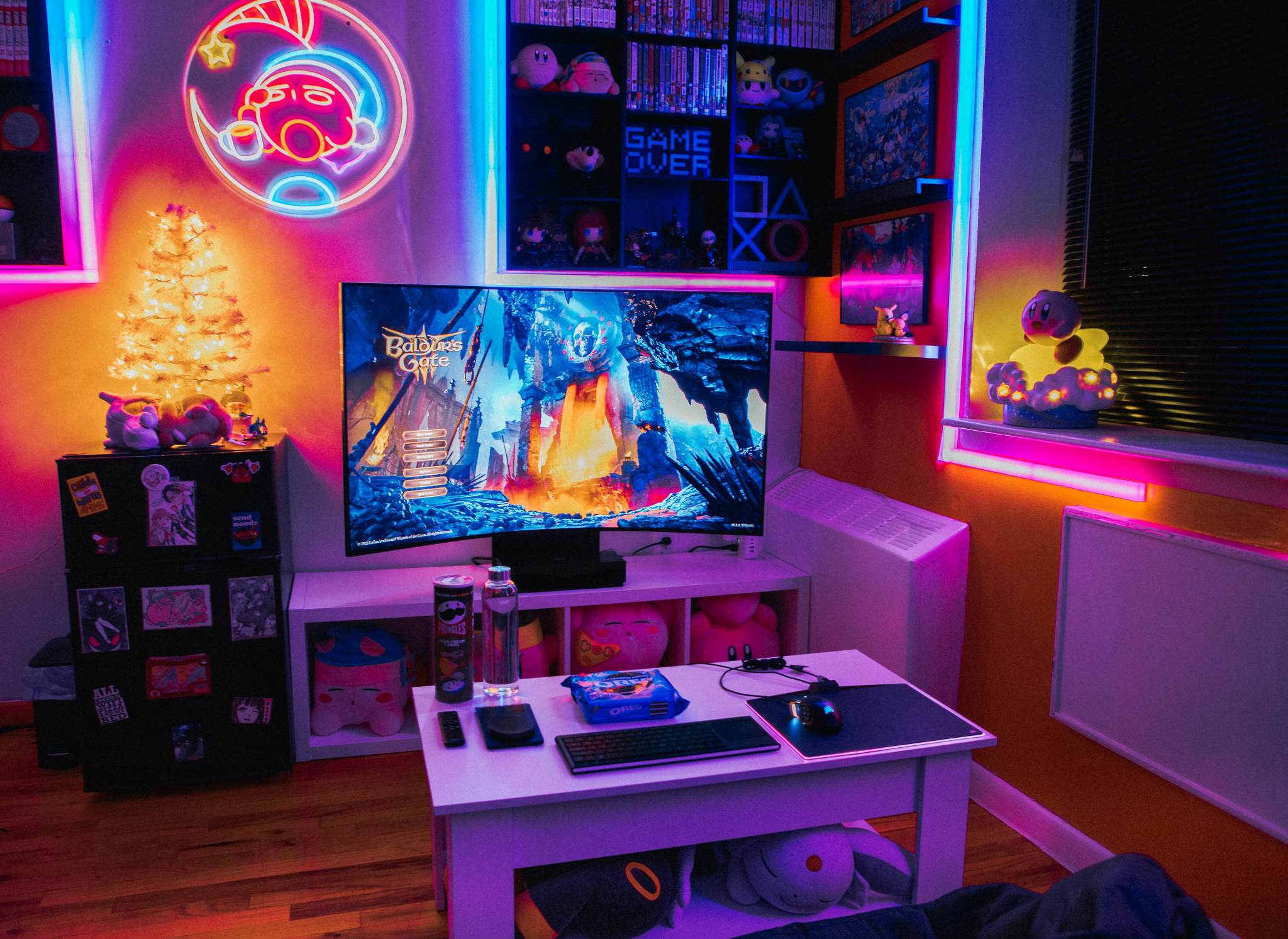
The video game industry has been impacted the most from the digital evolution of the last few years. It came from single-player games for consoles to metaverses with strong social connections, like in the case of Fortnite. Nowadays, it is a large entertainment sector, with revenues that are even bigger than in the case of films or music festivals. All thanks to the internet, as it helped computer games to evolve in the global social platform.
Modern video games, especially in the MMORPG, Battle Royale, and session-based shooter genres, have long ceased to be simply a way to kill time or test one’s reflexes. They have become full-fledged virtual worlds where people meet, communicate, build complex social hierarchies, develop team skills, and even earn real money. The industry has deliberately introduced numerous mechanics and tools that facilitate deep socialization among players on a global level. Among the most important developments of modern gaming era:
The introduction of these complex social elements has fundamentally changed the  perception of gaming in modern society, making it more inclusive, widespread, and socially accepted. Now, a multiplayer game is not simply a challenge to artificial intelligence or a virtual opponent, but a complex communication platform that, amid the pandemic and global lockdowns, has become the primary, and sometimes only, channel for maintaining social connections with the outside world for many.
The Attention Economy and the Monetization Revolution
The modern connected era has completely changed the economics of the entertainment industry. Now, attention plays a much more significant role than an instant money grab. The competition for screen time has led to the emergence of new, adaptable, and more aggressive monetization models.
Subscription-based models have become one of the most successful. Services like Spotify for music or Xbox Game Pass for gaming have accustomed users to paying a fixed monthly fee for access to vast catalogs. For corporations, this provides stable, predictable revenue, allowing them to plan long-term investments in content creation.
You can see that many games have become free to download, because they make money not from the initial buy of the distributive, but from the content that the player is going to buy, because of social connections or the beauty of in-game graphics. Among the elements of monetization:
- The sale of virtual items.
- Cosmetic upgrades.
- Battle Passes.
- Progress boosters.
This model has proven being effective, as it reduces the barrier to entry to zero and then uses complex psychological mechanics to motivate users to make purchases. The creator economy has flourished in the age of interconnectedness. Platforms like YouTube, Patreon, and Twitch have enabled independent creators to directly monetize their work through viewer subscriptions, donations, and advertising integrations, bypassing traditional producers and publishers.
About the Author