Walk along any Ontario waterfront and you will see both: Wooden docks with weathered planks that have been repainted more times than the owner can remember, and aluminum systems sitting in the water looking largely the same as the day they were installed. Sometimes they sit side by side on adjacent properties, which makes the comparison impossible to ignore.
Longevity is the question most buyers eventually get around to, usually after they have started adding up what annual maintenance on a wooden dock actually costs over time. The answer is not complicated, but the reasoning behind it is worth understanding properly before any money changes hands.
What Wood Actually Does in a Waterfront Environment
Timber and water have a relationship that goes back centuries. Wooden docks have been built on Ontario lakes and rivers for generations, and plenty of them have served their properties well for decades when maintained consistently. That track record is real and worth acknowledging.
What is also real is what consistent exposure to Ontario waterfront conditions does to wood over time, regardless of species or treatment.
Pressure-treated lumber resists rot better than untreated wood, but it does not eliminate the process. Moisture gets into end grain cuts, into fastener holes, into any surface that the treatment did not fully penetrate. Freeze-thaw cycles work that moisture deeper into the wood fibre each winter. By the time a dock board looks visibly deteriorated on the surface, the degradation below the surface has typically been underway for considerably longer.
Cedar holds up better in waterfront environments than most other species and carries a natural resistance to rot that pressure-treated alternatives try to replicate chemically. It is not immune. Consistent moisture exposure, UV radiation across a full Ontario summer season, and the physical demands of foot traffic, boat contact, and equipment loading all work against the fibre over time in ways that require consistent management to stay ahead of.
What consistent management means in practice is worth being specific about. Annual or biennial cleaning to prevent algae and mildew buildup. Regular inspection for soft spots, cracking, and fastener failure. Sealing or staining on a schedule that does not slip. Hardware replacement as corrosion advances. Board replacement as individual sections deteriorate beyond the point where surface treatment can address them. For a property owner who enjoys that kind of maintenance work and keeps up with it reliably, a wooden dock can have a respectable service life. For the majority of waterfront owners who have other things competing for their attention across the season, the maintenance schedule that looked manageable at purchase tends to slip, and the dock deteriorates faster than anyone planned for.
What Aluminum Actually Does in the Same Environment
Aluminum docks do not rot. That single fact resolves a significant portion of the longevity comparison before anything else needs to be said.
The degradation mechanisms that work steadily against wood in a waterfront environment simply do not apply to aluminum. Moisture does not penetrate aluminum framing and work its way deeper with each freeze-thaw cycle. UV radiation does not break down the structural integrity of the frame the way it attacks wood fibre and surface treatments. The material does not harbour the biological activity that accelerates wood deterioration in consistently wet environments.
What aluminum does experience is oxidation, which produces the dull grey surface appearance that aluminum in outdoor environments develops over time. That oxidation layer is worth understanding correctly rather than treating as evidence of deterioration. The oxide layer that forms on the aluminum surface actually protects the material below it from further corrosion. It is a self-limiting process rather than a progressive one, which is the opposite of what happens when rot gets established in wood.
Marine-grade aluminum alloys used in quality dock construction are specifically formulated for environments that combine fresh water, UV exposure, and the physical demands of regular use. The structural integrity of a well-built aluminum frame twenty years into its service life is not meaningfully different from its structural integrity on day one. The material does not soften, does not develop the kind of structural unpredictability that deteriorating wood exhibits, and does not require the ongoing intervention that keeps a wooden dock functional over the same period.
The Maintenance Comparison Laid Out Plainly
Wooden dock maintenance over a decade on an Ontario waterfront property typically involves annual inspection and cleaning, sealing or staining every one to three years depending on product and exposure, hardware replacement as corrosion advances through cycles of moisture and freezing, and board replacement as sections deteriorate. Add to that the time cost of monitoring the structure closely enough to catch problems before they compound, and the picture of what wooden dock ownership actually demands becomes considerably more demanding than the initial purchase suggested.
Aluminum docks over the same decade typically require seasonal installation and removal, occasional cleaning to remove surface dirt and algae from the decking surface, and inspection of connection hardware to ensure nothing has worked loose through seasonal movement. That is not a trivial maintenance profile, but it is a dramatically shorter list than the wooden alternative requires, and none of the items on it involve the structural integrity of the frame itself.
The hours spent on dock maintenance over ten or fifteen years of waterfront property ownership are hours that come from somewhere. For property owners who bought a waterfront property to use it rather than to maintain it, that difference is not abstract.
Fasteners, Hardware, and Where Things Actually Fail
Both dock types rely on fasteners and hardware that sit in waterfront environments year-round or across the active season. This is where material choices beyond the primary frame and decking material affect longevity in ways that deserve attention.
Wooden dock fasteners corrode. The interaction between wood, moisture, and metal hardware accelerates that process in ways that fasteners in dry environments do not experience. Stainless steel hardware performs better than galvanized alternatives but is not immune, particularly in locations where the fastener sits in contact with wet wood year-round. Hardware replacement is a routine part of wooden dock maintenance for this reason.
Aluminum docks built with compatible hardware that avoids galvanic corrosion between dissimilar metals have a significantly better fastener longevity profile. Quality aluminum dock systems use hardware selected specifically to avoid the galvanic reaction that occurs when incompatible metals sit in contact in a wet environment. That selection at the manufacturing stage prevents a category of failure that wooden dock hardware experiences, regardless of the quality of the hardware itself.
Decking Surface and What People Actually Walk On
The frame material determines structural longevity. The decking surface determines the daily experience of using the dock and has its own separate longevity profile worth considering.
Wooden decking develops splinters as the surface fibre breaks down under UV exposure and foot traffic. It becomes slippery when wet in ways that create genuine safety concerns, particularly for children and older adults. It requires the same sealing and treatment cycle as the structural members to maintain surface integrity and manage the slip risk that wet timber presents.
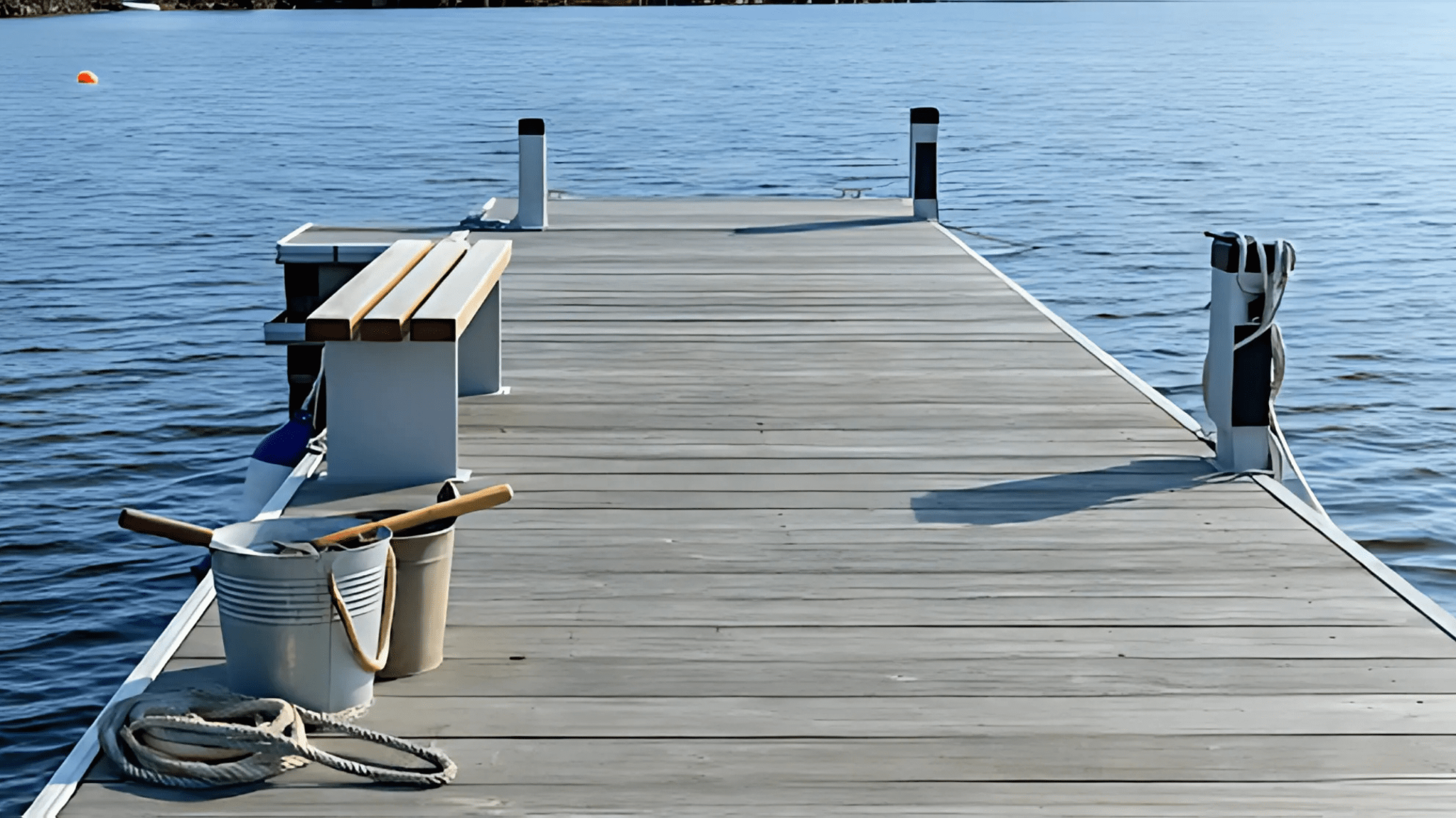
High-density polyethylene decking, commonly paired with aluminum framing in quality dock systems, does not splinter, maintains its surface texture across years of UV exposure, and provides consistent grip underfoot when wet. The safety consideration embedded in that last point is not a minor feature on a structure that gets used by people in bare feet, carrying gear, moving between boats and land in conditions ranging from calm to genuinely rough.
HDPE decking on aluminum docks also does not absorb water in a way that sets up the freeze-thaw deterioration cycle that affects wooden decking. The surface that goes in at installation is structurally the same surface ten years later, which is a statement that wooden decking cannot support, regardless of how well it has been maintained.
The Cost Conversation Framed Correctly
Aluminum dock systems cost more upfront than entry-level wooden dock construction. That comparison is accurate, and stopping there misleads buyers who are trying to make a genuinely informed decision.
The total cost of ownership over a realistic ownership period, which for a waterfront property is rarely less than ten years and often considerably longer, looks different from the purchase price comparison. Maintenance materials, hardware replacement, board replacement, professional work for repairs that exceed the owner’s ability to handle independently, and the eventual full replacement of a wooden structure that has reached the end of its useful life all belong in that calculation.
An aluminum dock system that requires minimal structural intervention across fifteen or twenty years and holds its resale value because the structural integrity is visibly intact is a different financial proposition than a wooden dock that requires consistent investment to maintain and eventually requires replacement on a timeline shorter than the property owner anticipated.
The Direct Answer to the Question
Aluminum outlasts wood on Ontario waterfront properties when the comparison is made honestly across a realistic ownership timeline rather than based on day-one purchase price.
That does not mean every wooden dock fails early or that aluminum is without any trade-offs. It means that the mechanisms driving deterioration in waterfront environments affect wood progressively and structurally in ways they do not affect aluminum, and that difference accumulates meaningfully over time.
Aluminum docks built to a quality standard with appropriate materials throughout, installed correctly for the specific site conditions, and maintained on the straightforward schedule they actually require will be performing reliably long after a comparable wooden installation has gone through one full replacement cycle and begun its second.
For most Ontario waterfront property owners, that is the comparison that matters.
About the Author