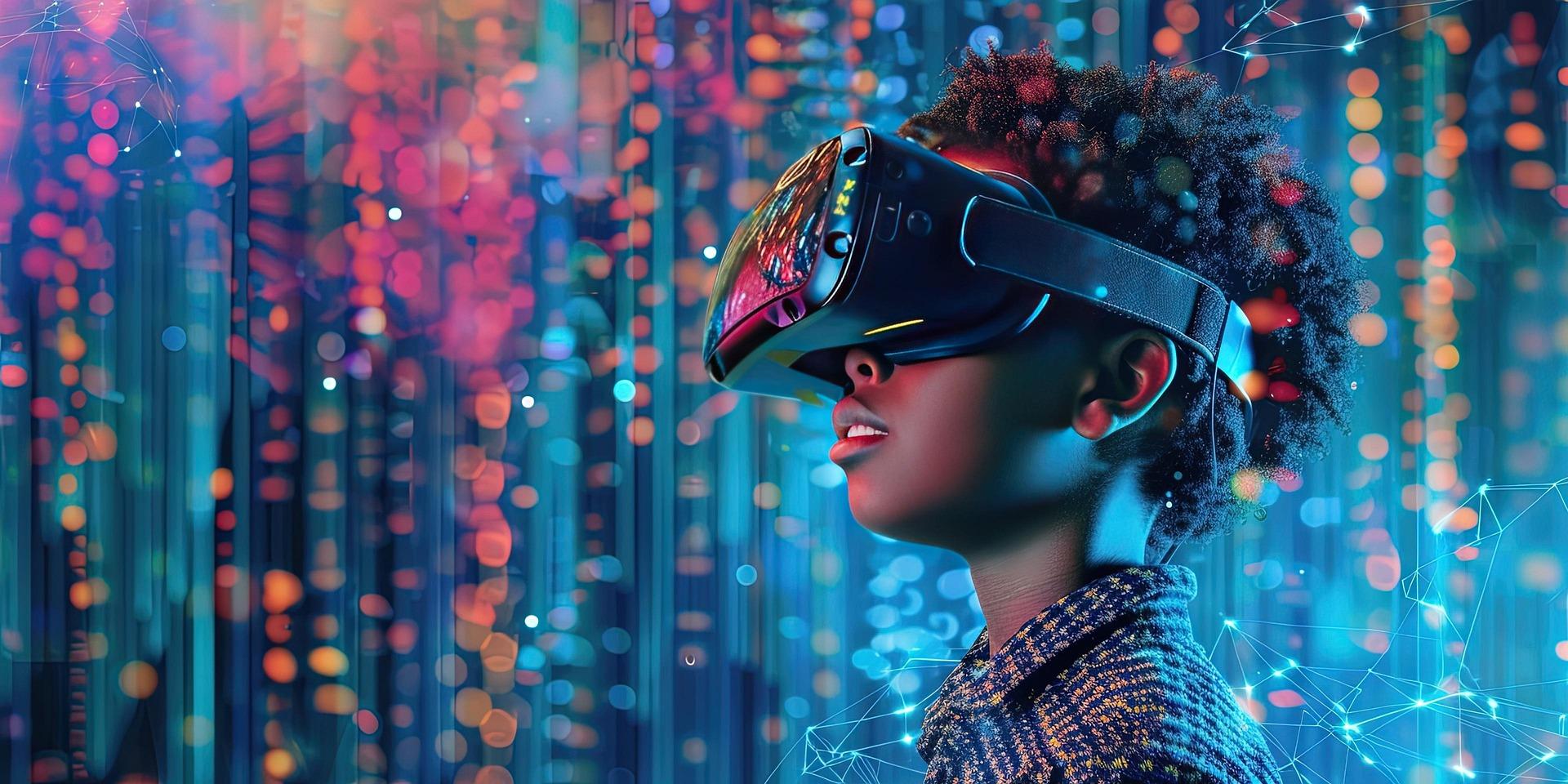
Education’s always been on the move, never really standing still for long. Every generation seems to get a slightly different version of the classroom, same idea, just upgraded bit by bit. Chalkboards gave way to whiteboards, whiteboards turned smart, and now even those feel like they’re starting to look a bit dated. What’s coming next isn’t just another upgrade either. It’s a proper shift in how learning actually happens, moving into something far more immersive and spatial.
It’s not just about making lessons look cooler or more “techy” for the sake of it. The real change is about how students actually understand information, and how teachers can get ideas across in a way that actually sticks.
The evolution of classroom tools
If you think about it, classrooms today barely resemble what they looked like a couple of decades ago. Back then, it was all chalk dust, handwritten notes, and static diagrams. Now, most schools are working with interactive whiteboards, online resources, and digital content that can be pulled up in seconds.
These smartboards already changed the game quite a bit. They made lessons more dynamic, more visual, and a lot less one-dimensional. Teachers can show videos, animations, diagrams, all sorts, without flipping through endless pages or drawing everything by hand.
But even with all that, it still feels flat in a sense. You’re still looking at a screen or a board. And that’s where the next wave of tools starts to come in. Something more immersive, more layered, more “in it” rather than just watching it.
The advent of 3D technology in education
This is where things start to get genuinely interesting. 3D learning isn’t just about fancy visuals, it’s about turning abstract concepts into something students can actually interact with. Instead of reading about something complicated, you can step inside it, rotate it, break it down, explore it from every angle.
Take space, for example. Instead of looking at flat images of planets, students can literally move through a virtual solar system. They can see how planets orbit, how distances work, how everything connects. It’s the kind of thing that makes complex topics click a lot quicker, especially for visual learners who struggle with traditional methods.
It also changes the energy in the classroom. Students aren’t just sitting there passively anymore, they’re engaged, moving, exploring, reacting. That shift alone can make a huge difference in attention and understanding.
The role of VR headsets in 3D learning
Devices like the Meta Quest 3S are playing a big role in pushing this forward. It’s not just a gaming bit of kit anymore, it’s becoming a serious educational tool as well. The idea is simple enough: instead of looking at a screen, you step into the lesson itself.
With something like this, teachers can build virtual environments where lessons actually take place inside the subject matter. Biology lessons can turn into 3D journeys through the human body. History lessons can recreate ancient cities. Science experiments can be run safely in fully controlled digital spaces.
It also helps teachers explain things that are usually quite difficult to visualise. Some concepts just don’t translate well into flat diagrams, no matter how good the explanation is. Having the ability to physically “see” and interact with those ideas changes how quickly students pick things up.
The future of 3D teaching
This whole 3D teaching shift isn’t something that’s just being talked about for the distant future, it’s already starting to happen in pockets of education. Some schools are experimenting with it, others are gradually building it into specific subjects, especially where visual learning makes the biggest difference.
As the tech becomes more affordable and easier to roll out, it’s likely to spread further. Not every classroom will switch overnight, but the direction is pretty clear, learning is becoming more immersive, more interactive, and a lot more hands-on than before.
There’s also a growing focus on how different students learn in different ways. Some pick things up through reading, others through listening, and plenty through doing. 3D learning tools naturally support that variety because they’re not locked into one format.
A common misunderstanding about 3D learning tech
One thing that often gets said is that this kind of technology is just a flashy add-on, something designed to impress rather than actually teach. That’s a bit of a misunderstanding, really.
The real value isn’t in how cool it looks, but in how it changes understanding. It’s about breaking down barriers in learning, not just adding visual effects on top of traditional teaching.
Another point people sometimes miss is that this doesn’t replace teachers at all. If anything, it gives them more ways to explain, demonstrate, and support students. The tech handles the visual side, but the guidance, context, and human interaction still come from the classroom itself.
About the Author