A Practical Template for a Partnership Enquiry helps teams send short, clear outreach that gets replies. It opens with a focused subject line, states a crisp value exchange, and ends with a single, low-friction next step. This guide explains why structure matters, when to use the template, and gives a ready-to-use email that professionals can adapt in minutes.
Key Takeaways
- A well-structured partnership enquiry with a clear subject line and specific value proposition boosts reply rates significantly.
- Effective partnership emails identify the sender, highlight mutual benefits, and conclude with a simple, actionable next step
- Use this partnership enquiry template when a measurable synergy exists, targeting decision-makers like partnership managers or content directors.
- Customize subject lines to be concise (6–8 words) and compelling, referencing recent relevant work or metrics to increase open rates.
- Choose email or contact forms based on recipient preferences, verifying via the site’s support or contact pages.
- Testing subject line variations helps optimize open and reply rates across different recipient segments.
Why A Well-Structured Partnership Enquiry Matters
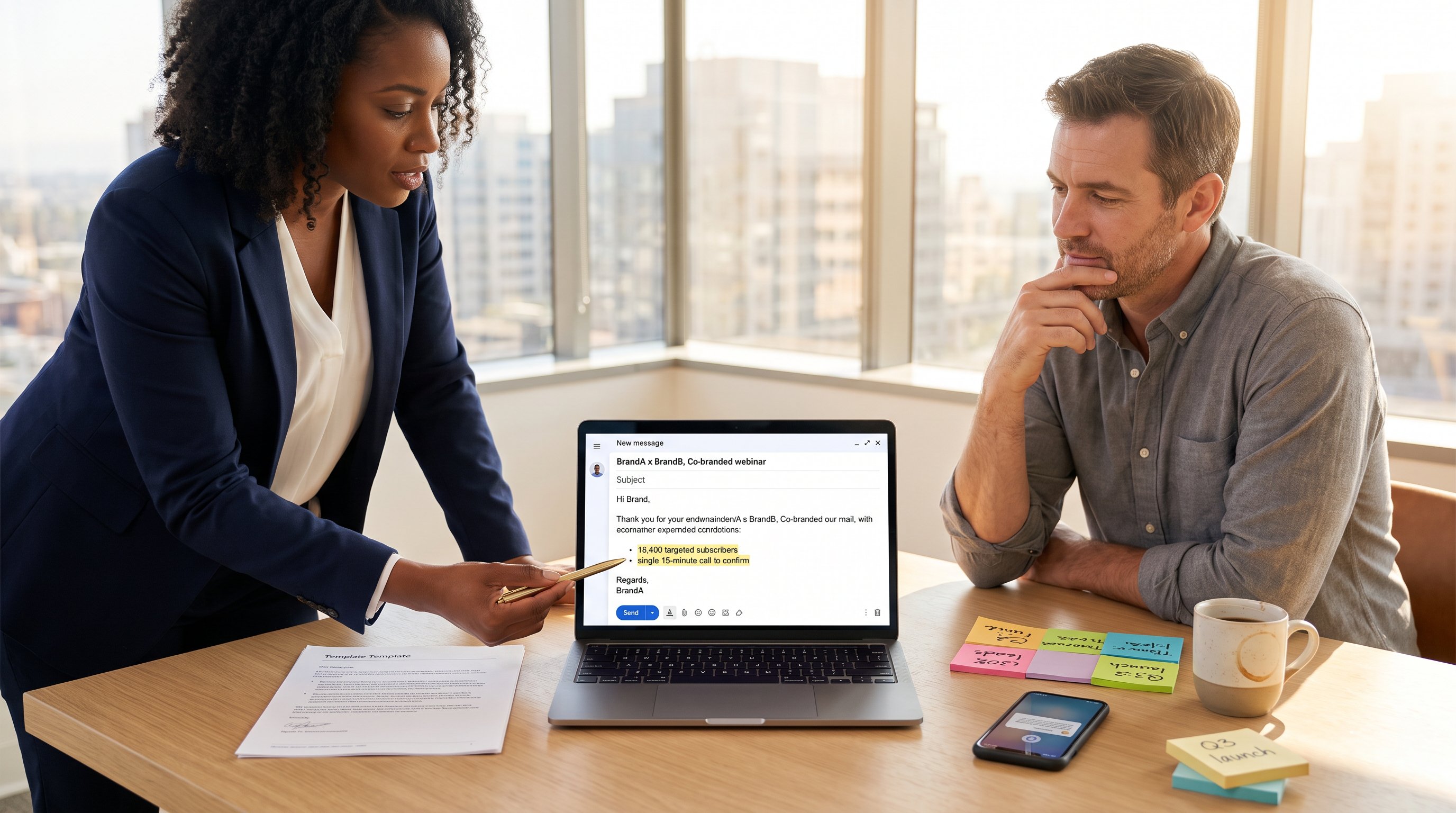
A clear partnership enquiry increases the odds of a reply. Teams that lead with mutual benefit and a precise ask make decisions easier for busy recipients. For example, a concise email that promises “a joint webinar reaching 18,400 targeted subscribers” converts far better than a vague “let’s collaborate” note.
A well-structured message does three concrete jobs: it identifies who is sending the message, it shows a specific benefit for the recipient, and it states the exact next step. That sequence reduces cognitive load. It also signals professionalism: recipients infer that a sender who plans details will follow through on execution.
Practical data supports this: outreach that includes a measurable outcome or time estimate, like “adds 3,000 impressions” or “saves 90 minutes of coordination per campaign”, moves discussions forward. The template below codifies those elements so that teams can avoid common mistakes: too-long introductions, empty flattery, and unclear CTAs. By compressing the value proposition into two to four short sentences, senders increase reply rates and shorten negotiation cycles.
When To Use This Template And Who To Target
Use this template when a clear, measurable synergy exists between two organizations. Typical scenarios include co-marketing campaigns, bundled product offers, affiliate programs, creator collaborations, or shared events. It is intended for first-contact outreach where the sender wants a quick yes/no on interest before investing time in a formal proposal.
Target recipients who control decision-making or gatekeep marketing partnerships: partnership managers, head of marketing, product leads, or content directors. If the target is a creator or small brand, address the owner directly and reference a recent campaign of theirs. For media contacts and journalists, tailor the hook to their beat, TechCrunch-style advice on pitching shows how targeted hooks matter when approaching press, for journalists the subject should show immediate relevance and newsworthiness.
When the communication channel is ambiguous, email vs form, choose email for direct outreach and a contact form when the recipient explicitly requests submissions. If unsure which to use, consult the site’s support or contact page to confirm the preferred route: for internal reference, outreach teams can review the site’s contact options for guidance, such as the page that explains how to contact the team and preferred channels. See the contact the team for a more complete rundown of related topics.
Ready-To-Use Partnership Enquiry Template
Subject lines, body copy, and a tight CTA form the core of any effective partnership enquiry. Below is a modular template with guidance on length and tone so teams can adapt it for outreach to brands, platforms, or creators.
Subject Line: Write A Short, Compelling Hook
Lead with clarity. A subject line should be 6–8 words and communicate the two-party nature of the idea. Examples that work: “BrandA x BrandB, Co‑branded webinar” or “Partnership idea: seasonal bundle.” These hooks set expectations and increase open rates by reducing ambiguity.
Avoid generic phrases like “Quick question” unless tied to a specific reference: “Quick question about your November launch.” Subject lines that reference a recent piece of work or metric, e.g., “Loved your 42K subscriber webinar, collab idea”, create curiosity and show that the sender did assignments.
Test two variants for the same outreach: one mentioning a specific result and one naming the collaboration type. Over time, teams should track opens and replies to learn which hooks work with different recipient segments.
Conclusion
A practical partnership enquiry leads with mutual value, uses specific outcomes, and closes with one simple CTA. By keeping the message short, measurable, and targeted, senders make the decision process easy and reduce lost opportunities. Adapt the simple template above to reflect exact numbers, timelines, and the recipient’s recent activity to improve reply rates and start collaborations faster.
About the Author